W ater safety compliance does not begin and end with temperature checks, logbooks or routine inspections. Effective control of Legionella, scalding risks and wider waterborne pathogens relies on having informed, structured risk assessments, where thermostatic mixing valve (TMV) management plays a central and often underestimated role.
TMVs are frequently treated as standard fixtures rather than critical safety devices requiring justification, monitoring and governance. In reality, the decision to install, retain, remove or modify a TMV should always be driven by risk assessment, balancing scalding risk with microbiological risk.
Across healthcare, education and public or commercial estates, preventable Legionella risks rarely stem from major system failures. More often, they develop gradually through overlooked design decisions, redundant outlets, poorly maintained TMVs and low-use outlets or facilities that introduce stagnation into otherwise compliant systems.
This position is consistent with UK HSE guidance, where Legionella outbreaks are rarely caused by infrastructure failure. Instead, they are typically the result of water systems not being managed correctly, with the accumulation of unmanaged or poorly governed risk within systems that remain mechanically operational.
Why TMV management matters
TMVs are primarily installed to mitigate scalding risk, particularly in environments serving vulnerable users such as healthcare settings, schools and care facilities. By blending hot and cold water to a controlled outlet temperature, they reduce the likelihood of thermal injury at the point of use.
However, from a microbiological perspective, TMVs introduce additional complexity:
• Mixed temperature zones within the valve body
• Internal components such as strainers and check valves prone to fouling
• Reduced temperatures downstream of the blending point
• Increased maintenance and inspection requirements. Where servicing, fail-safe testing and performance verification are inconsistent, TMVs can become areas of temperature instability and biofilm accumulation. For this reason, TMVs must be understood as dual-risk control devices, not a standalone scalding solution. Their use must always be justified through a combination of scalding risk assessment and water safety/Legionella risk assessment. Installation by default, without structured justification, increases system complexity without necessarily reducing overall risk.
When TMVs are not required
TMVs are often installed as a precaution rather than through risk-based decision making. They may not be required where:
• The outlet is staff-only
• The scald risk is low
• Temperatures are already safely controlled centrally (potentially with a supplementary control method such as online dosing)
• Risk assessment supports alternative control measures. Where a TMV is deemed unnecessary, its removal must be controlled and documented. First, it’s important to review and update the system’s Legionella Risk Assessment. Any scalding risk must also be assessed and documented, and the TMV must be removed by a competent person. The pipework must also be reconfigured to avoid any deadlegs or stagnation. Then, the system’s schematics must be updated, along with asset registers and the Water Safety Plan.
Any TMV removal should reduce system complexity and eliminate risk, not introduce new stagnation points or risk.
When TMVs are required
There are clear scenarios where TMVs are essential, particularly where vulnerable users are present. This may include healthcare environments, schools, nurseries, care homes and public washrooms. This does not mean that TMVs are always required throughout these settings, and the need for a risk assessment remains the same. In these settings, TMVs must be:
• Correctly specified (TMV2 or TMV3 depending on the environment)
• Installed as close to the point of use as possible
• Commissioned to safe outlet temperatures (typically 39-43°C, outlet/facility dependent)
• Included within routine servicing, calibration and fail-safe testing programmes. A TMV that is installed but not maintained is an unmanaged risk.
Managing underused cold taps
A commonly identified configuration during Legionella risk assessments is a wash hand basin supplied via a TMV-controlled blended outlet (often labelled ‘hot’) alongside a separate cold tap that is rarely or never used.
From a scalding perspective, this may appear appropriate. However, from a water safety standpoint, the rarely used cold outlet presents a potential stagnation point. Low-use pipework can allow water to remain static for prolonged periods, increasing the likelihood of:
• Temperature drift into the 20-45°C range
• Biofilm development along internal surfaces
• Reduced disinfectant residual
• Amplification of waterborne pathogens. In this context,‘no use’ does not equate to ‘no risk’. It represents unmanaged stagnation within a configuration that may no longer reflect operational reality.
Reactive compliance vs engineered risk reduction
A recurring issue across many estates is the shift toward reactive compliance, where:
• TMVs are installed without reviewing actual need.
• Low-use outlets remain in place despite stagnation risk.
• Deadlegs are assumed insignificant.
• Maintenance regimes do not reflect system complexity. Over time, these individually manageable issues combine to increase overall system risk.
Effective water safety management requires alignment between Legionella and scalding risk assessments, accurate asset registers and up-to-date schematics, and routine TMV servicing, calibration and fail-safe testing. There must also be regular reviews of outlets’ necessity and usage, and the removal of any redundant assets where reasonably practicable.
Governance must be proportionate, documented and reflective of real-world use, not based on historic design assumptions.
TMV management is not solely about preventing scalding, just as Legionella control is not solely about monitoring temperature. Both require a coordinated, risk-based approach that considers stagnation, system design, complexity, performance and long-term maintenance.
Many enforcement actions and costly remediation programmes originate from cumulative oversight, an un-serviced TMV, an infrequently or unused tap, or a poor configuration that was never revisited.
The most resilient estates are those that regularly challenge legacy arrangements and ensure every outlet/ facility and every TMV remains justified. www.waterhygienecentre.com
Jim Perry is Senior Consultant and Authorising Engineer (Water) at the Water Hygiene Centre.
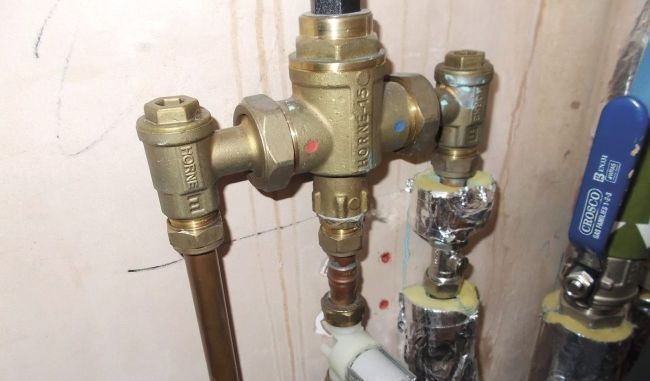
In public, healthcare and environmental settings, TMVs must be correctly specified.