While heat pumps are, in some respects, similar to traditional boiler systems, there are key differences that directly impact installation, commissioning, and long-term performance that installers need to keep in mind.
With the push towards lower carbon heating, heat pumps are increasingly being installed across the UK. In fact, upcoming regulation changes such as the Future Homes Standard will only increase this demand further. That means installers play a critical role not just in fitting systems correctly, but in ensuring they remain efficient and reliable over time.
Although heat pumps generate heat differently, the rest of the system will look familiar. Pipework, radiators, and underfloor heating circuits are still used, which means the same risks of corrosion, sludge, limescale, and circulating debris will apply, and can all cause issues if not addressed.
For installers, the fundamentals remain the same: clean the system thoroughly, dose it with a quality inhibitor and fit a reliable in-line filter. Ongoing maintenance and checking chemical levels should also be part of the handover advice, in line with BS 7593:2019 and current Building Regulations.
Using both chemical protection and filtration is essential. The inhibitor protects internal metal surfaces from corrosion and scale, while the filter captures debris already in the system and anything introduced during installation or servicing.
What’s different with heat pumps?
Where heat pumps differ is in how they operate, and this affects how system protection should be approached.
Firstly, flow temperatures are much lower, typically between 35°C and 55°C. Although this improves efficiency, which is a major benefit, it also creates an environment where bacteria can develop more easily. Over time, this can lead to biofilm build-up and microbiologically influenced corrosion (MIC), both of which can significantly impact a system’s performance. For installers, it is crucial to add a suitable and high-quality biocide alongside the inhibitor to help prevent this.
Secondly, heat pumps often run at significantly higher flow rates, sometimes up to 80 litres/min. It is important to understand that not all filters are designed to cope with this. For example, standard magnetic filters may struggle to retain debris at these flow rates, allowing contaminants to remain in circulation.
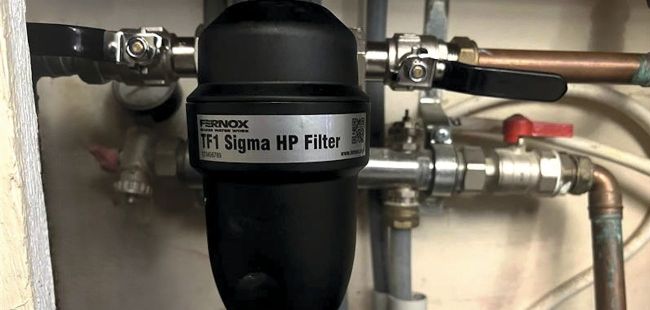
Installers would be well-advised to look for filters that have been specifically designed for heat pump systems. The units need to be able to handle higher flow while still effectively capturing debris. For example, features that slow down water locally within the filter, such as the TF1 Sigma HP from Fernox, help particles to settle, improving overall system cleanliness.
It’s also important to choose a filter that doesn’t restrict flow or create unnecessary pressure drop. Maintaining good flow is key to achieving the expected efficiency and performance from the heat pump.
Getting the install right first time
Professionals will be well-aware that product choice matters. Using proven, high-quality chemicals and filters from reputable manufacturers helps to avoid call-backs and protect your reputation. Equipment that has been properly tested for durability and long-term performance will always be a safer choice on site. What’s more, look for companies, such as Fernox, that offer robust in-house testing.
While heat pumps share some familiar elements with traditional heating systems, treating them in exactly the same way can lead to problems further down the line. Understanding the differences – and approaching system installation and protection with those in mind – will ensure the system runs efficiently and reliably for years to come. www.fernox.com
David Holley is Technical Manager, Chemistry at Fernox.