2026 is a milestone year for the plumbing and heating industry, thanks largely to the rapid shift towards decarbonisation, smart technology and strict sustainability regulations, all of which are being driven by the UK’s net zero targets.
This year brings into effect a series of standards that place greater emphasis on system efficiency, competence and long-term performance. With these standards come greater expectations on installers to demonstrate technical ability, and a deeper understanding of how components, controls and system designs interact.
The push towards higher energy efficiency performance has continued with the updated Building Regulations Part L and Part F, introduced in 2025, now fully embedded across residential and commercial projects. Together, they are reshaping how plumbing, heating and hot water systems must be designed, installed and commissioned, particularly in increasingly airtight and efficient buildings.
With an objective to dramatically reduce carbon emissions while improving both energy and water efficiency, the target is clear: new homes should produce 75-80% lower carbon emissions than properties built to 2013 regulations. To achieve this, the updated regulations call for a more rigorous, system-wide approach to energy efficiency and mandate that homes are designed around low-carbon heating solutions from the outset.
The Future Homes Standard shifts the installer’s role from replacement work to using trusted, compliant components that help ensure installations are ready for long-term, regulatory expectations.
The new Part L and Part F regulations remove straightforward like-for-like replacements and introduce stricter performance targets for boilers, heat pumps and heat interface units, requiring whole-house energy performance to be considered. Together, Part L, Part F and the forthcoming Future Homes Standard are redefining best practice. Installers are therefore advised to adopt a whole-house perspective and prioritise measurable outcomes at every stage, to be in the best position to meet regulatory expectations in 2026 and beyond.
Heat networks enter a new era
Heat network regulations have been in force since 2014, but January this year marked a significant shift in oversight, with Ofgem becoming the statutory regulator for heat networks.
While the regulations themselves aren’t new, the transition brings all heat networks into a fully regulated status that sits under a broader regulatory framework. New standards that were introduced include expanded consumer protections, formal licensing requirements, higher technical standards, and strengthened reporting and enforcement powers.
Greater regulatory scrutiny from Ofgem also means that incorrect metering or substandard installations can now lead directly to non-compliance and potentially costly corrective action. As a result, the correct installation of meters, valves and heat interface units is no longer simply best practice; it is fundamental to regulatory compliance.
Valve selection, flow control and overall installation quality all play a direct role in ensuring that heat is delivered efficiently, and that metering remains precise and reliable.
There are a variety of components that installers can use to meet regulatory requirements. Firstly, Pressure Reducing Valves (PRVs), such as those from Reliance Valves, are important within heat networks as stable system pressure is essential for accurate metering and consistent operation.
By maintaining controlled downstream pressure, PRVs help prevent excess flow rates and offer a level of stability that not only protects equipment and components but also supports billing accuracy and overall efficiency.
Secondly, high-quality push-fit connectors and twist-and-lock fittings, like those supplied by John Guest, are well suited to the demands of communal and district heating systems, where durability and long-term integrity are critical. When combined with careful pipework design and proper commissioning, these components help ensure that communal heating systems remain efficient and compliant.
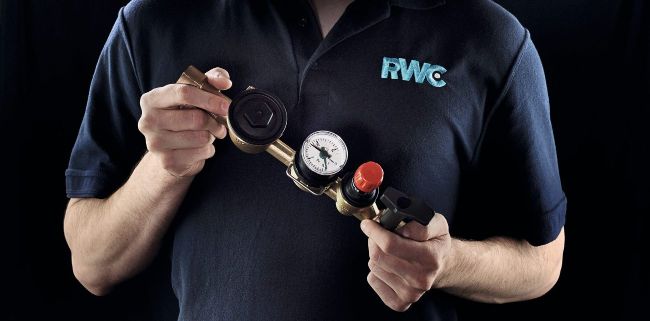
Toby Howard-Willis is Technical Sales Engineer for RWC
With Ofgem now in place, compliance is closely linked to performance, transparency and accountability. For installers, this means technical understanding, careful product selection and precision installation are more crucial than ever.
Increased scrutiny
This year also sees a heightened focus within the Water Supply Regulations, for the most part, in relation to the installation, testing and ongoing maintenance of Reduced Pressure Zone (RPZ) valves. While RPZ backflow protection is not a new practice, its enforcement and oversight has increased significantly and placed greater responsibility on installers.
The revised Approved Installation Method for RPZ backflow valves came into force in early 2025. It introduced updated technical expectations and mandated that testers were required to have compliant, updated test equipment in place by 30 June, 2026.
As well as the requirement for compliant equipment, there is the broader move towards demonstrable competence, documented procedures and auditable compliance. Water companies are now placing greater emphasis on formal competence and certification for RPZ testers. For installers, incorrect installation or inadequate testing can result in enforcement action, mandatory retesting or even system shutdowns.
Backflow protection is under particular scrutiny in commercial, mixed-use and higher-risk domestic settings, where the potential consequences for contamination are greater. As a result, the use of WRAS-approved products is fundamental. Reliance Valves offers dedicated backflow prevention valves designed to meet regulatory requirements, alongside isolating valves that support safe servicing and maintenance. High-quality push-fit connectors can also help reduce the risk of installation errors and minimise the likelihood of corrective work.
Overall, backflow prevention can no longer be treated as a fit and forget activity. Rather, it demands compliant products, correct installation practices, certified testing and ongoing maintenance. As enforcement tightens, installers who prioritise competence, documentation and product compliance will be best positioned to meet the evolving regulatory demands.
Meeting these regulations relies on choosing components that support efficiency, safety, and compliance across the whole system. It also means valves, fittings and controls are no longer secondary; in fact, they are central to meeting modern building and water regulations, which is why installers must align the regulatory requirements with the demands of everyday usage. www.reliancevalves.com/gb/en